Choosing the best Vietnam family destinations is less about finding one perfect city and more about matching each place to your children’s ages, energy levels, and interests. Vietnam can offer beaches, hands-on food experiences, gentle boat rides, history, wildlife, and short adventures, but the country is long and travel days can quickly shape the mood of a group. The most successful family trips combine one or two anchor destinations with enough free time to swim, rest, and eat at an unhurried pace.
This guide compares practical choices for families with toddlers, school-age children, and teenagers. It also explains how to build a route without turning every day into a transfer day, and how to choose accommodation, activities, and transport that work for several generations travelling together.
How to choose Vietnam family destinations
Start with the rhythm your family can genuinely enjoy. Toddlers usually need short journeys, familiar meal options, and accommodation with space to nap. Primary-school children often enjoy a balance of swimming, animals, crafts, boats, and food. Teenagers may want a more active trip with cycling, kayaking, caves, markets, or a chance to see a city after dark. Grandparents and mixed-age groups usually benefit from comfortable bases rather than a long list of check-in and check-out days.
Use the three-base rule
For a first family holiday, three bases are often enough: one city or cultural base, one coast or countryside base, and one final stop close to the departure airport. For example, Hanoi, Hoi An, and a beach or island destination can create variety without requiring the group to cross the entire country every few days. If your trip is shorter than a week, choose two bases instead.
Before booking, compare the complete journey rather than only the flight time. A short flight may still involve airport transfers, baggage collection, and a late arrival at a hotel. A train can be slower but more social and relaxing for some families. The site’s guide to trains, flights, buses, and other Vietnam transport is useful when you are weighing those trade-offs.
Hoi An and Da Nang: the easiest all-round family combination
Hoi An and Da Nang are strong choices for a first family trip because they combine a manageable transfer, beaches, food, countryside, and culture. Da Nang offers an urban base with a major airport, broad coastal areas, restaurants, and easy access to attractions. Hoi An adds a slower atmosphere, a historic centre, village roads, and nearby An Bang Beach.
Why families like this area
Families can divide the day into simple blocks: a morning walk or cycling activity, a quiet lunch, pool or beach time in the afternoon, and an early evening visit to the Ancient Town. Vietnam Tourism highlights Hoi An’s countryside, vegetable villages, cooking classes, beaches, and lantern-lit streets as family-friendly experiences. These activities are valuable because they are participatory rather than purely sightseeing-based: children can mix ingredients, ride through rice fields, make a craft, or watch a local demonstration.
Da Nang works especially well for families who want a beach city with practical amenities. My Khe Beach is close to hotels and restaurants, while the Marble Mountains provide a short cultural and landscape outing for older children and teenagers. Check current access arrangements and conditions before going, particularly if anyone in the group has difficulty with stairs or uneven surfaces.
Plan at least three nights in the area if you want both Hoi An and Da Nang. Staying in one hotel can reduce packing, but staying in Hoi An may suit families who value evenings on foot. A Da Nang base may be better when airport convenience, larger hotel facilities, or a city beach is the priority. For broader lodging decisions, compare this site’s guide to where to stay in Vietnam by region and travel style.
Hanoi: the best Vietnam family destination for culture and curiosity
Hanoi is a rewarding choice for school-age children and teenagers who enjoy busy streets, museums, food, and history. It is stimulating rather than restful, so it works best when the itinerary leaves room for pauses. A family can explore a small section of the Old Quarter, stop for a drink or dessert, and then continue rather than attempting to cover every landmark in one morning.
Family-friendly ways to experience Hanoi
- Choose one museum or historic site, then pair it with an open space or relaxed café.
- Look for a water-puppet performance or another short cultural show that gives children a story to follow.
- Use a food walk or cooking activity to introduce Vietnamese flavours gradually.
- Visit craft areas such as Bat Trang only when the family is comfortable with the extra transfer time.
Hanoi is a useful beginning or ending point because it gives children context for the country’s history and everyday life. Vietnam Tourism’s family route includes the Temple of Literature, the Ho Chi Minh Complex, Bat Trang, and a water-puppet show, but families do not need to reproduce the entire list. Pick two or three experiences that match your group, and keep one half-day unscheduled.
Families should also think about where they sleep. A hotel on a quieter edge of the Old Quarter or around West Lake can provide more space and calmer evenings, while a central address reduces taxi time. Read the practical advice in Essential Vietnam Travel Tips to Save Before You Go before choosing a busy central location for young children.
Phu Quoc: a simple beach-and-pool holiday
Phu Quoc suits families who want to minimise sightseeing pressure. The island is strongest when treated as a place to settle rather than a destination to race around. A resort or hotel with a pool, shaded areas, family rooms, and easy access to food can make the trip comfortable for toddlers and younger children. Older children may enjoy boat trips, snorkelling conditions when suitable, cable-car views, or a day at a water park, but these should be optional rather than the only reason for visiting.
How to keep an island stay comfortable
Choose the beach area according to your priorities. A quieter shore may be better for early bedtimes, while a more developed area can make meals, supplies, and activities easier. Ask the hotel about room configuration, stairs, child policies, transfers, and the distance to the beach instead of relying on a promotional photograph.
Weather and sea conditions can change plans, so avoid building a short island trip around one boat excursion. Keep a pool day, a local food outing, or a relaxed beach morning as a backup. Vietnam Tourism lists Phu Quoc among its family destinations and points to beaches, island activities, and family-oriented attractions, but current opening arrangements and marine conditions should always be confirmed directly with the operator.
Can Tho and the Mekong Delta: hands-on travel for curious children
Can Tho is a good choice for families who want to see a different side of Vietnam without committing to a strenuous mountain route. The Mekong Delta offers waterways, tropical gardens, small workshops, village roads, and food traditions. A morning boat outing can be memorable for children, while a countryside stay or guided cycling route can turn the landscape into an experience rather than a view through a vehicle window.
The main planning challenge is timing. River activities often begin early, and young children may not enjoy a pre-dawn departure after an international flight. Schedule the delta after the family has adjusted, or choose a later morning activity if the floating-market experience is not essential. Ask whether life jackets are available in children’s sizes and whether the boat is suitable for your group before confirming.
Can Tho works well as a two- or three-night southern base, especially when paired with Ho Chi Minh City. It is less suitable for a rushed overnight stop when the group would spend more time packing than exploring.
Mai Chau, Ninh Binh, and northern nature: choose the right level of adventure
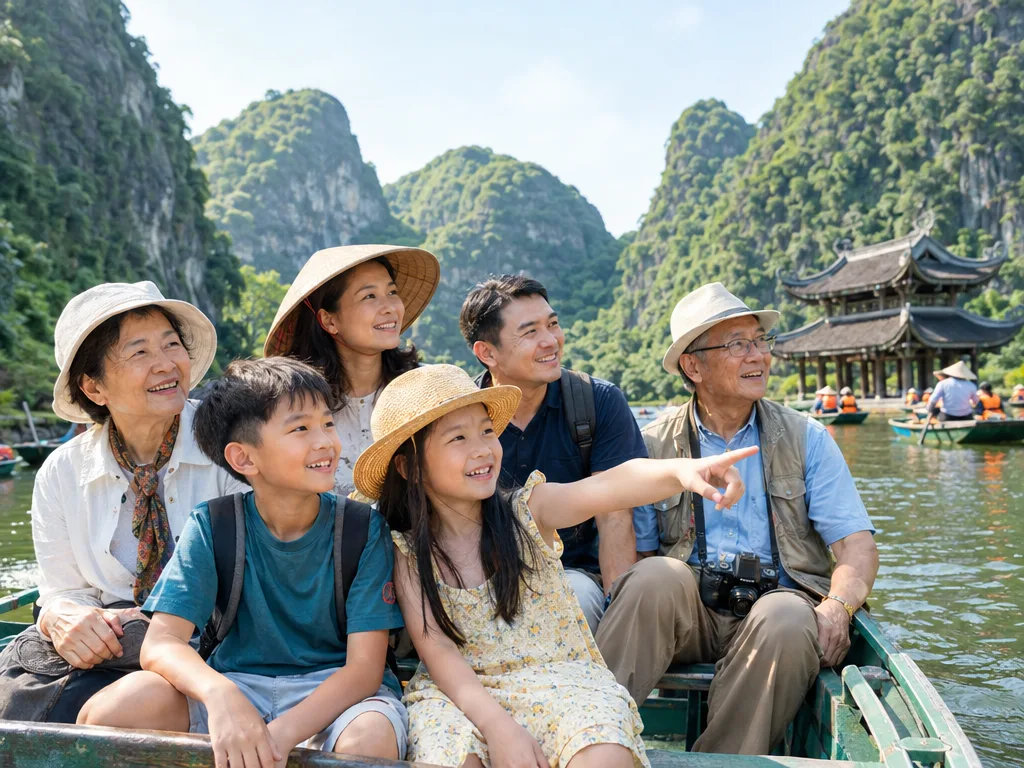
Northern Vietnam can be excellent for families who want landscapes and outdoor activity, but not every mountain destination has the same level of convenience. Mai Chau is known for a valley setting, cycling, village experiences, and stilt-house stays. Ninh Binh offers limestone scenery, boat trips, temples, and countryside routes that can be combined with Hanoi. These options often provide a gentler introduction to rural Vietnam than a demanding trek.
When to choose the north
Choose Ninh Binh when you want a nature day or short countryside break from Hanoi. Choose Mai Chau when the family is comfortable with a longer transfer and would enjoy staying outside a city. Choose Sa Pa or another higher mountain destination only after considering road time, walking ability, weather, and how children respond to altitude, crowds, or uneven paths.
For teenagers and active older children, a nature-focused route can be the highlight of the trip. For toddlers, the same route may be better as a private day trip with a flexible return rather than a sequence of remote hotels. A family itinerary should be ambitious about experiences but conservative about exhaustion.
Build an itinerary by age and travel style
With toddlers and preschoolers
Prioritise two bases, short transfers, a reliable room setup, and daily downtime. Hoi An and Da Nang, or a beach destination combined with one city, are usually easier than a north-to-south route. Book a private transfer when it removes a difficult connection, and confirm car-seat availability rather than assuming it. Carry familiar snacks, but also allow children to try simple local foods such as rice, noodles, fruit, and grilled dishes.
With primary-school children
Mix one cultural activity with one physical or playful activity each day. A cooking class, lantern-making session, village cycle, beach afternoon, water-puppet show, or boat ride can give children a clear reason to remember a place. Avoid scheduling several museums or temples back to back. Let children help choose between two acceptable options; this creates participation without handing over the whole itinerary.
With teenagers
Offer independence within clear boundaries. Teenagers may enjoy street-food tours, photography walks, caves, snorkelling, cycling, kayaking, or a motorbike-free adventure such as a guided countryside route. Leave room for them to select a café, market, or activity, while adults confirm safety, weather, transport, and operator standards. A trip that includes both cultural depth and time to relax usually works better than one built entirely around family attractions.
Practical planning choices that prevent family-trip stress
Allow a recovery period after arrival. A hotel pool, a nearby meal, and an early night may be more valuable than an ambitious first-day tour. Keep important medication, a change of clothes, and essential child supplies in hand luggage. For multi-generational groups, reserve adjoining or nearby rooms rather than assuming a single large room will be comfortable for everyone.
Use the transport mode that best protects the family’s energy. Flights can shorten long distances, trains can make a journey more social, and private transfers can simplify rural areas. Recheck departure times, luggage rules, weather disruptions, and venue policies close to the travel date. The published overview of planning Vietnam travel for families and groups can help you turn these choices into a shared plan before booking.
For timing, compare regional conditions instead of searching for one universal best month. The country stretches from the northern mountains to tropical islands, so rain, heat, and sea conditions can vary significantly. Use the guide to the best time to visit Vietnam alongside the needs of your chosen route.
Final recommendation: choose fewer places, better matched
The best Vietnam family destinations are the ones that fit your group’s pace. Hoi An and Da Nang are the strongest all-round choice for a first visit; Hanoi adds culture and urban curiosity; Phu Quoc offers an easy beach reset; Can Tho brings hands-on delta experiences; and Mai Chau or Ninh Binh reward families who want landscapes without an overloaded route. Start with the ages and interests in your group, select two or three bases, and protect time for rest. That approach leaves room for Vietnam’s most valuable family moments: a shared meal, an unexpected conversation, or children discovering something no itinerary could have predicted.

JOIN THE CONVERSATION
Comments (0)
No comments yet. Be the first to share a thought.