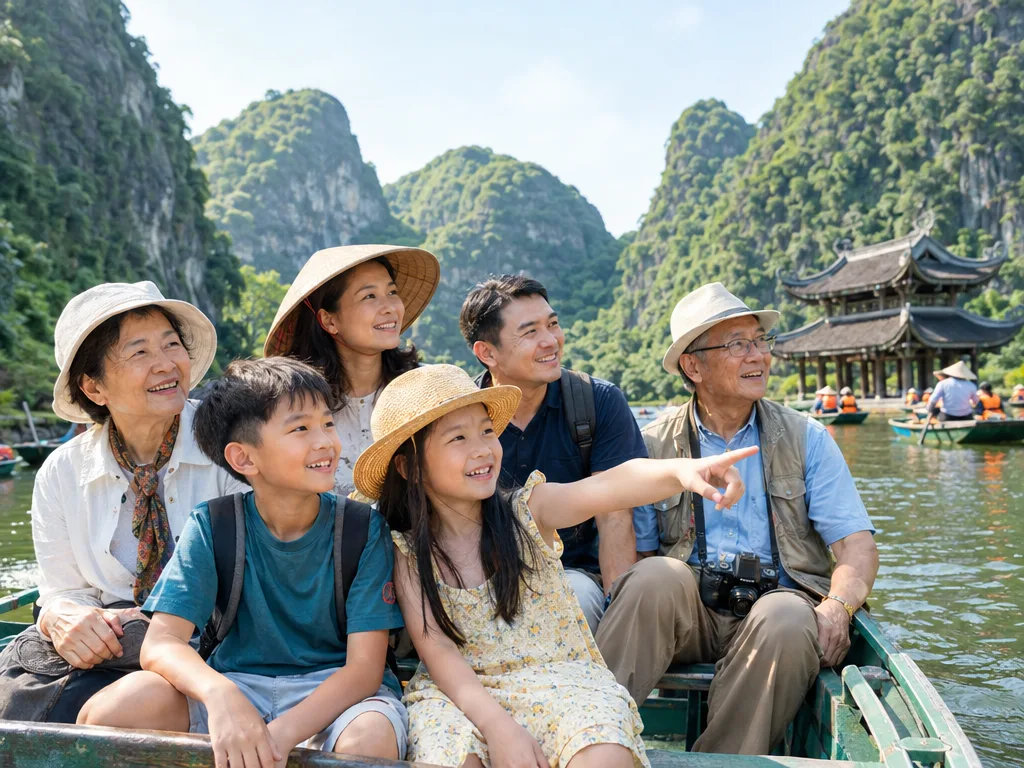
Planning Vietnam for grandparents, parents, children, or friends is less about finding one perfect destination than designing a trip that lets different people enjoy the same day in different ways. A multigenerational Vietnam itinerary needs comfortable bases, short decision lists, realistic transfer days, and enough flexibility for slower mornings or changing energy levels.
Start with the group’s shared travel priorities
Before choosing cities, agree on what the group wants most. Families often say they want culture, food, beaches, and memorable activities, but those goals can compete with comfort and recovery time. A grandparent may value easy seating and a quiet room, while teenagers want independence and children need movement. The best plan does not make every traveller do everything together.
Use a simple priority conversation
- Ask each traveller to name two non-negotiables and one activity they can skip.
- Separate must-see places from nice-to-have experiences.
- Agree on a comfortable daily start time before booking tours.
- Decide which days can split into smaller groups.
- Choose one person to coordinate bookings and one backup decision-maker.
Turn the answers into a shared trip brief: preferred pace, mobility considerations, food boundaries, room requirements, and the maximum number of long travel days. This prevents the itinerary from being built around the most enthusiastic traveller.
Choose fewer bases and make each one work harder
For a family group, changing hotels is a hidden cost. Every move involves packing, checking out, waiting, loading bags, finding rooms, and re-establishing routines. A route with fewer bases can feel richer because the group has time to learn the neighbourhood and choose activities without rushing.
Da Nang is a useful central base for groups that want beach time, city conveniences, and easy day choices. Vietnam’s official tourism page describes broad beaches, street food, the Son Tra Peninsula, Marble Mountains, and access by Da Nang International Airport, with trains, buses, taxis, and ride-hailing on the ground. That combination gives a group several levels of activity without requiring a new hotel each night.
Phu Quoc suits groups that want a slower island stay. The official tourism page highlights beaches, local food and farming, Phu Quoc National Park, and access by international airport or ferries from Rach Gia and Ha Tien. Treat it as a base for unhurried days rather than trying to cover every part of the island.
Hanoi can add history, food, and urban atmosphere, but a city stay needs careful neighbourhood and walking choices. Vietnam Tourism describes Hoan Kiem Lake, the Old Quarter, the Temple of Literature, museums and water-puppet culture as key experiences. Build a Hanoi plan around short outings with a rest period, not an all-day march through attractions.
Match destinations to different energy levels
A strong multigenerational itinerary offers a low-effort version, a standard version, and an optional active version of the day. This keeps the group together for the parts that matter while allowing people to opt out without feeling that they are disrupting the plan.
For relaxed city days
Choose one main sight, one comfortable meal, and one flexible activity. In Hanoi, that might mean a lakeside stroll, a nearby cultural visit, and an early dinner. In Da Nang, it could be a beach morning followed by a shaded café or market visit. Avoid stacking several attractions that each require separate transport and queues.
For scenery and outdoor time
Use the same principle: make the viewpoint or beach the anchor, then keep the surrounding schedule open. Da Nang’s official tourism guidance presents Marble Mountains with caves, pagodas, viewpoints, stairs, and a lift. That makes it a good example of an activity where the group should check the route and choose a suitable section rather than assume everyone will complete the same walk.
For island relaxation
On Phu Quoc, divide the day into a comfortable beach or pool period and one optional outing. Some travellers may prefer a market or food experience, while others may want a quiet afternoon. A group does not need to turn every island day into a full excursion.
Plan accommodation around recovery, not only location
Families and groups should compare accommodation by how easily everyone can recover after a long day. A central address is useful, but a quieter room, lift access, reliable air conditioning, breakfast flexibility, and enough seating may matter more than being beside the busiest street.
- Ask whether rooms are close together and whether the property has stairs or a lift.
- Confirm bed types, bathroom arrangements, and whether adjoining rooms are actually available.
- Look for a place where at least one person can rest without ending the whole day.
- Check the distance to food, pharmacies, and transport rather than relying on a map pin alone.
- Keep the first night simple, especially after an international arrival.
For larger groups, apartments or connected rooms can improve shared time, but they also create more responsibility for meals, laundry, and supplies. Hotels can simplify breakfast, reception questions, and room changes. Choose the format that reduces work for the trip coordinator.
Build transfer days that do not exhaust the group
Travel days should be treated as itinerary items, not empty spaces between attractions. Keep the morning light, prepare a small carry-on with medication and water, and avoid booking an important timed activity immediately after arrival. When possible, schedule the most demanding transfer before a slower base rather than before a packed sightseeing day.
Use a door-to-door view of every journey. The advertised flight or train duration is only one part of the day; add time for leaving the hotel, reaching the station or airport, waiting, collecting bags, and getting to the next room. With children or older travellers, toilet access, seating, snacks, and temperature control can be more important than saving a small amount of time.
Keep one shared folder with booking references, hotel addresses, passport copies where appropriate, emergency contacts, and the day’s meeting point. Give every adult the essential details instead of making one organiser the only person who knows the plan.
Use a flexible daily rhythm
A dependable rhythm is more valuable than an impressive schedule. Many groups work well with one main activity before lunch, a protected rest window, and one optional late-day plan. The rest window is not wasted time: it allows children to nap, older travellers to recover, and everyone else to reset before dinner.
A practical day template
- Morning: one planned outing while energy is highest.
- Midday: a seated meal with enough time for different food preferences.
- Afternoon: rest, pool time, a café, or an optional small-group activity.
- Evening: an easy dinner near the accommodation, with nightlife treated as optional.
Build in a decision point after lunch. Ask whether the group wants to continue, return to the hotel, or split up. This is more effective than waiting for frustration to appear.
Make meals easier for a mixed-age group
Food is one of Vietnam’s great pleasures, but a group should not make every meal a test of bravery. Alternate adventurous meals with familiar options, and choose restaurants where people can order different dishes. Keep snacks available for children and anyone managing a long day.
Ask about allergies and dietary restrictions early, then communicate them consistently. Do not assume a dish is suitable because it looks simple; verify ingredients with the restaurant and keep a backup option. Street-food stops can work well when the group is comfortable with the setting, but a seated restaurant can be the better choice after a transfer or for travellers who need predictable conditions.
Give children independence without losing coordination
Older children and teenagers often enjoy Vietnam more when they have limited choices and real responsibility. Let them select one meal, help navigate a short route, photograph a market challenge, or choose between two afternoon options. Independence should be bounded: agree on meeting points, phone access, who they stay with, and what happens if plans change.
For younger children, carry a familiar snack, a light layer, sun protection, and a small activity for queues. Avoid promising that every stop will be exciting. A playground, pool, beach, or unstructured hour may be the highlight of the day.
Prepare for weather and changing plans
Vietnam’s regions can have different conditions at the same time. The official tourism pages describe Da Nang as warm year-round with a wetter period from November to February, while Phu Quoc’s dry season is generally November to April and its wetter season runs from May to October. Use those patterns as planning context, not a guarantee for a particular day.
Keep a rain plan for every base: a museum or craft activity, a cooking or food experience, a café neighbourhood, a hotel rest day, or a shorter local outing. Do not fill every weather gap with a distant backup excursion. A flexible group plan should make it easy to change the order of activities without losing a reservation or disappointing everyone.
Set group rules before departure
Small agreements prevent avoidable tension. Decide how expenses will be shared, whether everyone pays into a common fund, how optional activities are handled, and how much notice is needed before changing plans. Agree that anyone can take a rest day without defending the decision.
Choose a daily meeting point and a simple communication channel. Keep a printed or offline copy of the hotel address and key contacts. If the group splits, record who is with whom and when everyone will regroup. These habits are especially useful when phones lose signal, batteries run low, or a busy area makes the group hard to reassemble.
A sample structure for a comfortable family trip
For a week, consider two bases rather than three. Spend the first few nights in a city with easy food and cultural choices, then move to a beach or relaxed base for the remainder. For a longer trip, add one central stop only if it improves the route rather than simply adding another famous name.
Each base can follow the same pattern: arrival and recovery, one highlight day, one flexible local day, and a final low-pressure day before moving on. Active travellers can add optional excursions, while grandparents or younger children can keep the core plan comfortable. This structure leaves room for memorable surprises without making the whole trip depend on perfect energy, weather, or punctuality.
Final checklist for multigenerational Vietnam travel
- Choose a manageable number of bases.
- Confirm room layout, beds, lifts, and quiet options.
- Reserve recovery time after every major transfer.
- Offer different activity levels instead of one compulsory schedule.
- Keep food, medication, documents, and contact details accessible.
- Agree on spending, meeting points, and split-group rules.
- Prepare one realistic rain or low-energy alternative per day.
The most successful Vietnam family trips are not the ones with the longest checklist. They are the ones where every generation gets a meaningful experience, nobody has to hide exhaustion, and the group has enough space to enjoy being together.

JOIN THE CONVERSATION
Comments (0)
No comments yet. Be the first to share a thought.