A Vietnam family itinerary works best when it leaves room for real life. Vietnam offers lively cities, gentle beach days, hands-on food experiences, dramatic landscapes, and a strong sense of place, but a family trip can become tiring if every day involves a long transfer or an early start. The most successful plan usually combines two or three regions, keeps the number of hotel changes under control, and alternates active sightseeing with slower days.
This guide explains how to build a comfortable route for children, teenagers, parents, and grandparents. It focuses on the decisions that matter most: where to go, how long to stay, how to move between stops, how to choose activities, and how to protect your group’s energy. For a broader starting point, compare this guide with Planning Vietnam Travel for Families and Groups.
Start with the shape of your family trip
Before choosing attractions, decide what kind of holiday your group wants. A family that wants beaches and swimming needs a different route from one that wants history, food, and nature. Ask each traveller to choose one priority, then build around the overlap rather than trying to include every famous place.
- First family trip: choose a simple north-to-centre or centre-to-south route with short internal connections.
- Mixed ages: use a city, a nature destination, and a beach or resort base so no one type of activity dominates.
- Older children and teenagers: include cooking, cycling, kayaking, markets, or a craft experience instead of only guided monuments.
- Young children or grandparents: favour two- or three-night stays, midday breaks, lifts or ground-floor access, and private transfers where practical.
A useful rule is to plan one main activity each morning and keep the afternoon flexible. A second activity can happen if everyone still has energy, but it should not be the condition for a successful day. This approach also makes room for weather, delayed transport, naps, and spontaneous discoveries.
Choose a route that does not exhaust the group
Vietnam is long, and distances can look deceptively small on a map. The official tourism overview explains that domestic flights are often the most convenient choice when a family wants to connect distant regions, while trains and buses make more sense when the journey itself is part of the experience. Read the site’s Vietnam transport guide before committing to an overland-heavy plan.
Seven to nine days
Pick one region and one nearby extension. A northern plan might combine Hanoi with Ninh Binh and a coastal or bay area. A central plan could pair Da Nang or Hoi An with Hue. In the south, Ho Chi Minh City can be combined with the Mekong Delta or a beach base, depending on the season and your group’s interests. Avoid trying to visit Hanoi, central Vietnam, and the far south in one week.
Ten to fourteen days
Two regions are realistic if you use one domestic flight and stay at least three nights in the major bases. A balanced route might include Hanoi and a northern nature stop, followed by Hoi An or Da Nang and a beach period. Another option is Ho Chi Minh City, the Mekong Delta, and a longer island or coast stay. Keep the final two nights in one place rather than ending with a complicated transfer before an international flight.
Two to three weeks
A longer trip can cover north, centre, and south, but it should still feel like a sequence of bases rather than a checklist. Give each region a clear role: culture and food in a major city, landscapes or countryside in a slower stop, and rest beside the sea. A route with fewer hotel changes is usually more enjoyable than a longer list of destinations.
Build each destination around family-friendly days
The official Vietnam Tourism site’s family section highlights the country’s range of family experiences, from beaches and nature to food, attractions, and cultural visits. Use that variety to create contrast. Two consecutive days of temples and museums may be too much for younger travellers, while two full resort days may leave teenagers wanting more variety.
City days
In Hanoi or Ho Chi Minh City, choose one walkable cluster rather than crossing the city repeatedly. Pair a cultural stop with a meal, a market, a lake, or a café break. Food is an easy way to involve different ages: children can start with familiar rice, noodles, fruit, or grilled dishes, while adults explore regional specialities. Order several small dishes when possible so the group can share without committing everyone to one unfamiliar plate.
Nature and countryside days
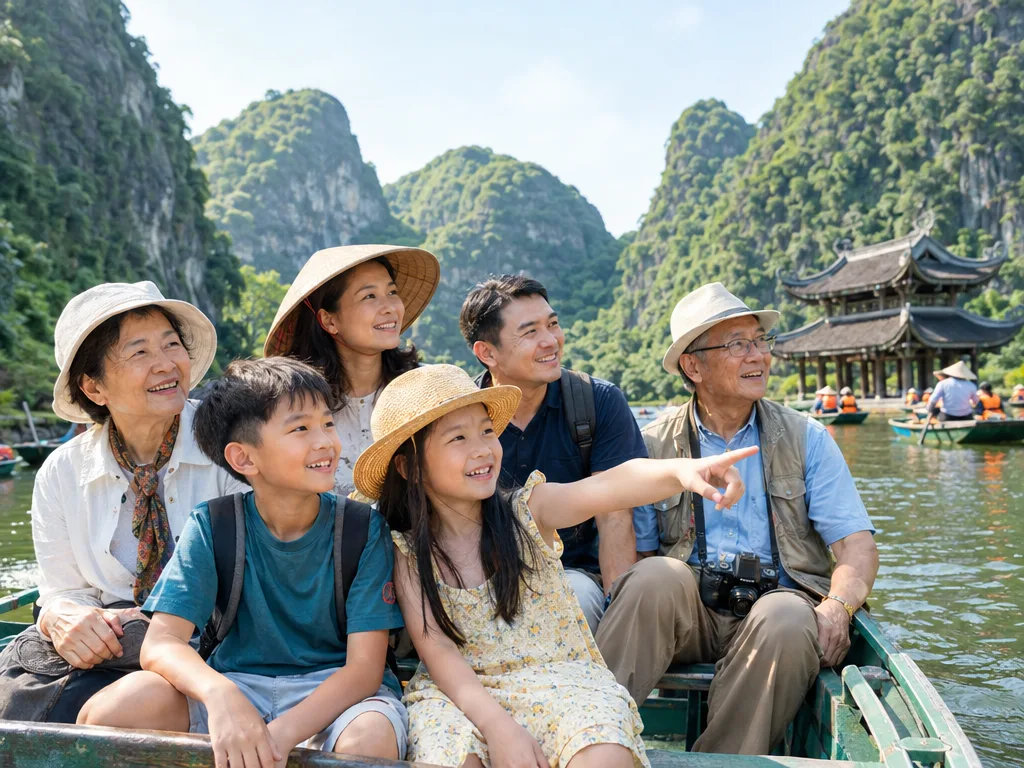
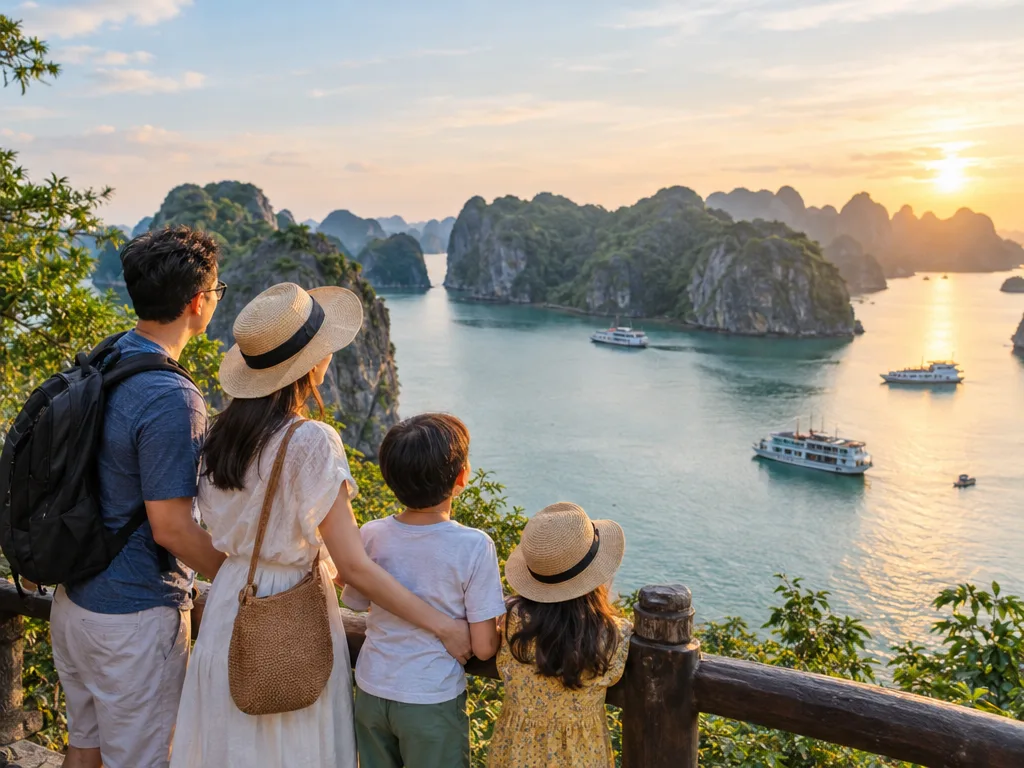
Nature stops work best when the itinerary is specific about effort. A boat ride, a short cycle, a viewpoint, and a village visit are different experiences from a demanding hike. Ask the operator or guide how much walking, stair climbing, sun exposure, and waiting are involved. If the answer is vague, treat the activity as a flexible option rather than the day’s only plan.
Beach and resort days
Do not treat a beach as a filler destination. A good beach base can absorb jet lag, give grandparents a break, and let children reset between sightseeing days. Check whether the property’s location suits your group: a quiet beach may be ideal for small children, while older children may prefer easy access to restaurants, activities, and evening walks. Plan one outing every day or two, not a full schedule from sunrise to dinner.
Plan transport around comfort, not just price
Transport choices shape the whole Vietnam family itinerary. A low-cost option may become poor value if it creates a late arrival, a missed meal, or a difficult night with tired children. Compare the complete journey: hotel-to-hotel time, luggage handling, bathroom access, arrival location, and how much energy remains at the end.
- Flights: useful for long distances when time and energy matter more than seeing the landscape between regions.
- Trains: appealing for families who enjoy slow travel and want a more spacious journey; check the exact cabin arrangement before booking.
- Private cars: practical for short regional routes, multiple stops, or groups with grandparents and young children.
- Local taxis and app-based rides: convenient within cities, but confirm the pickup point and vehicle size for a large group.
- Boats and bicycles: memorable when matched to the weather, fitness, and confidence of every participant.
For a group, keep one shared day bag with tissues, water, snacks, hand sanitiser, sun protection, spare clothes, and any essential medication. Pack a separate small bag for each child so a long transfer does not require opening every suitcase.
Choose accommodation that reduces daily friction
Family accommodation is about layout and location as much as room size. A larger room far from restaurants may be less convenient than two connected rooms in a central area. Before booking, check whether the property can provide the sleeping arrangement your group needs, whether lifts are available, and how easy it is to reach breakfast, food, and transport.
Use the site’s guide to where to stay in Vietnam by region and travel style when comparing bases. You can also browse the Where to Stay in Vietnam category for related planning ideas. For families, the best location often means a short walk to useful services, not necessarily the most famous neighbourhood.
Ask about practical details before arrival: stairs, pool rules, breakfast timing, laundry, extra beds, noise, and luggage storage. If the group is arriving late, arrange the first meal or a simple food option in advance. Small preparations prevent the first evening from becoming a negotiation while everyone is hungry.
Keep children and teenagers engaged
Family travel improves when younger travellers have some control. Let them choose a meal, a market snack, a photo challenge, or one activity during the trip. This does not mean handing over the itinerary; it means giving them a reason to notice where they are.
Ideas for younger children
Short boat rides, fruit tasting, simple craft activities, hotel pools, parks, and gentle beach time can be more successful than a long explanation at a historic site. Visit one major cultural attraction at a time, use stories rather than a catalogue of dates, and build in a snack or play break before patience runs out.
Ideas for teenagers
Teenagers often respond well to activities with a clear challenge or creative outcome: learning to make a local dish, photographing a market, cycling through the countryside, trying a water activity, or choosing the evening meal. Give them a realistic budget for small purchases and agree on meeting points if the group separates briefly.
For a first trip, the first-time Vietnam travel guide helps set expectations about traffic, food, weather, and everyday logistics. Share the relevant parts with older children so they understand the trip before arriving.
Protect health, safety, and energy
Families do not need to be anxious about Vietnam, but they do need a few routines. The official tourism health and safety guidance recommends travel insurance, consulting a medical professional about individual needs, carrying necessary prescription medicine, and taking extra care when travelling far from major medical facilities. Treat that advice as a starting point, not as a substitute for personal medical guidance.
Keep a written note of allergies, medications, and emergency contacts. Use sun protection, encourage regular water breaks, and plan indoor or shaded alternatives during the hottest part of the day. For children who struggle with heat, a slower morning and an early dinner may work better than adding another attraction.
In busy areas, establish a simple family rule: choose a visible meeting point before anyone separates, keep bags closed in crowded places, and use reputable transport. Adults should also agree who is responsible for passports, cash, and room keys. These habits are covered in more detail in the site’s Vietnam Travel Safety category.
A practical planning checklist
Work through this checklist before booking the final version of your route:
- Choose the regions that match the group’s priorities and the time available.
- Limit hotel changes and protect the last night before an international departure.
- Check every long transfer for total door-to-door time, not only the ticket duration.
- Book rooms and beds that match the group’s real sleeping needs.
- Reserve only the activities that are difficult to arrange at short notice; leave space for rest.
- Share dietary needs, allergies, mobility considerations, and arrival details with providers.
- Prepare a day bag, medication kit, copies of key documents, and a child-friendly snack supply.
- Build a wet-weather or low-energy alternative for each major sightseeing day.
Conclusion: leave room for the best moments
The best Vietnam family itinerary is not the one with the most stops. It is the one that lets different generations enjoy the country at a sustainable pace. Combine a few strong bases, mix cities with nature and rest, choose transport for the whole group, and keep each day flexible enough to respond to weather and energy. With that structure in place, the meals, conversations, views, and unexpected discoveries have room to become the memories everyone carries home.

JOIN THE CONVERSATION
Comments (0)
No comments yet. Be the first to share a thought.