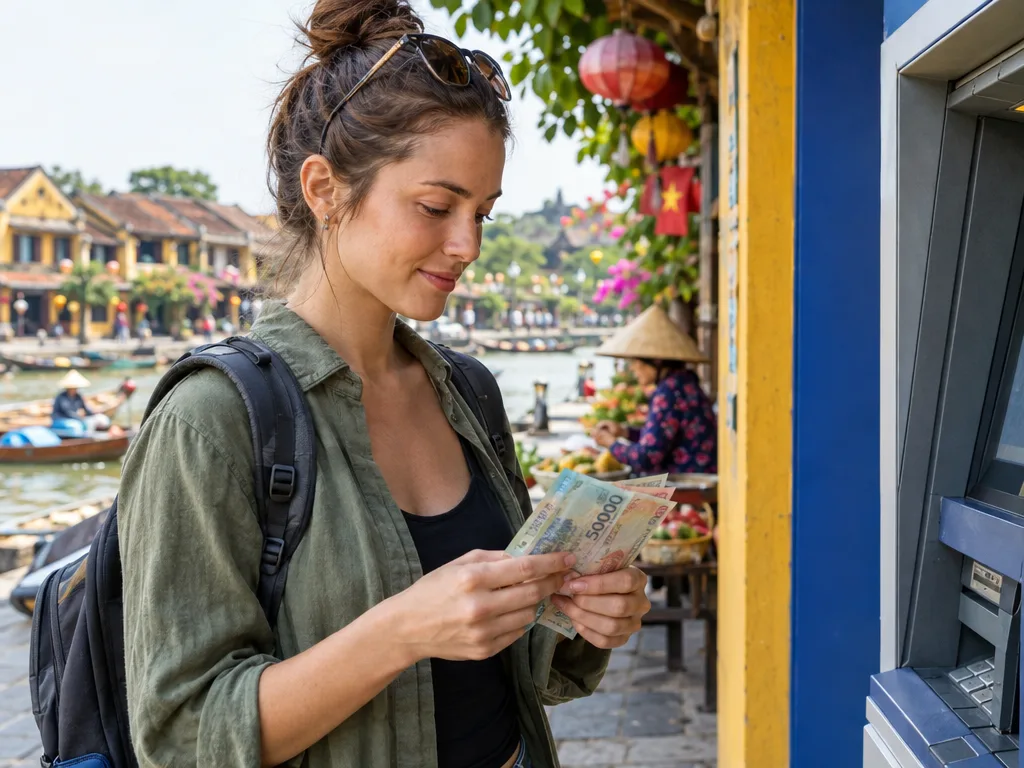
Knowing how to pay in Vietnam makes everyday travel easier. The most useful approach is not choosing between cash and cards, but carrying a small mix of both, checking your change, and keeping a backup payment method separate from your day bag. This Vietnam travel money guide explains how Vietnamese dong, ATMs, cards, exchange, tipping, bargaining, and spending safeguards fit together so you can arrive prepared without carrying more cash than you need.
Understand Vietnamese dong before you arrive
Vietnam’s official currency is the Vietnamese dong, written as VND or ₫. Vietnam Tourism notes that the currency uses both paper and polymer banknotes, while coins are not used in everyday travel. Notes range from smaller denominations to high-value notes, so the number of zeros can feel unfamiliar during your first few purchases.
Build the habit of checking the denomination before handing over a note. This matters especially when you are tired, paying in a busy market, or comparing similar-looking colours. Read the printed number rather than relying on colour alone. Keep a few small notes accessible for short rides, drinks, snacks, public facilities, and small purchases, while storing larger notes securely.
A simple way to read prices
When a price is written in thousands, confirm whether the seller means thousands of dong and repeat the amount before paying. If a menu, receipt, or driver’s quote is unclear, ask “Bao nhiêu tiền?”—“How much is this?”—and use your phone calculator if necessary. The goal is not to convert every purchase perfectly into your home currency. It is to understand the local amount, avoid rushed decisions, and keep your spending visible.
Cash and cards work best together
Cash remains useful for small purchases, street food, local vendors, and situations where a card terminal is unavailable. Cards are more convenient for many larger travel expenses, including accommodation, tours, restaurants, shops, and spas, although acceptance depends on the business and the destination. Vietnam Tourism’s official payments guide recommends preparing some local cash while noting that major international cards are commonly accepted at larger establishments.
A practical daily setup is to carry enough dong for the next part of your day and keep your main reserve somewhere safer. Carry one card for normal spending and keep a second card separate as a backup. If you travel with a companion, avoid putting every payment method in the same wallet. This turns a lost wallet into an inconvenience rather than a trip-ending emergency.
- Use cash for small, informal, or remote purchases.
- Use a card where the business clearly accepts it and the terminal is visible.
- Keep a backup card and emergency cash separate from your everyday wallet.
- Check your banking app for alerts after larger or unfamiliar transactions.
Before departure, tell your bank that you will be travelling if its policies require it. Check foreign-transaction fees, cash-withdrawal fees, daily limits, and how your bank handles fraud alerts. Save the bank’s official contact route in your phone and keep a second copy of important numbers offline.
Using ATMs and exchanging money
International-card ATMs are available in major airports and cities, and hotels can often help guests locate one. Vietnam Tourism states that withdrawal limits vary by bank and ATM, so do not assume that one machine’s limit applies everywhere. If the first withdrawal is declined, check whether the problem is the card, the amount, the network, or the machine before trying repeatedly.
Safer ATM habits
- Choose an ATM in a bank branch, airport, shopping centre, or well-lit public location.
- Inspect the card slot and keypad for anything loose or unusual.
- Cover your PIN and take your card, cash, and receipt before leaving.
- Decline or question a conversion option if the screen does not clearly explain the rate and fee.
- Keep the amount you withdraw aligned with your near-term needs instead of carrying a large reserve.
If you exchange cash, compare the displayed rate and final amount before handing over your money. Count the dong yourself and keep the receipt until you are satisfied that the transaction is complete. Airport exchange counters can be convenient on arrival, while banks and established exchange providers may be useful later. Avoid accepting help from unsolicited strangers around an ATM or exchange counter.
Remote areas and small islands may have fewer ATMs or less reliable card acceptance than major cities. Withdraw or exchange a sensible reserve before a rural transfer, boat trip, national-park visit, or long journey, but do not treat that as a reason to carry all your trip money at once.
Paying by card without losing control
When paying by card, confirm the amount on the terminal or receipt before authorising the transaction. Keep the card in sight where possible. If a terminal offers to charge you in your home currency or in Vietnamese dong, understand that the two options may use different conversion rates and fees. Your card issuer controls some of the final cost, so check its travel guidance before you leave.
Contactless payment can be convenient where supported, but a contactless symbol does not guarantee that every card or terminal will work. Carry the physical card and know your PIN. Some transactions may require chip-and-PIN, a signature, or an additional verification step. If a payment fails, do not repeatedly tap without checking whether the first attempt was completed. Look for a receipt, app alert, or confirmation from the merchant.
Keep digital payments secure
Use device security, update your banking app before travelling, and avoid entering financial details on unknown public Wi-Fi. A reputable hotel or café network is not automatically private. For sensitive actions, use mobile data or a trusted connection. Lock your phone, enable transaction notifications, and store recovery information separately from the device.
Scan-to-pay and local digital-wallet options may appear in some businesses, but travellers should not assume that every local payment method accepts an overseas card or foreign phone number. Treat QR codes like payment terminals: check the recipient, amount, and confirmation screen before approving anything.
Budgets, prices, tipping, and bargaining
Vietnam offers choices across different budgets, but the right amount to carry depends on your route and travel style. Separate your plan into accommodation, transport, food, activities, shopping, connectivity, and a contingency reserve. This makes it easier to see whether a spontaneous tour or expensive transfer fits without confusing daily spending with the whole-trip budget.
Keep a short note of what you spend for the first few days. Record the amount in dong and a plain-language category such as breakfast, taxi, entrance, or laundry. After you understand your routine, you can adjust your cash withdrawals and reduce unnecessary conversions. Vietnam Tourism publishes reference prices but cautions that actual costs vary by location, season, and provider, so use official examples as orientation rather than a promise of what every seller will charge.
Tipping is not a universal requirement in Vietnam. It can be appreciated in situations such as private guiding or personal services, while restaurants and cafés do not generally require it. If a service charge is already shown, read the bill before adding anything. A sincere thank-you is also appropriate. For markets and informal shopping, gentle bargaining may be customary in tourist areas; ask the price, compare a few options, and walk away politely if the amount does not suit you.
Protect your money while moving around
Divide your payment methods. Keep the day’s spending cash in an easy-to-reach wallet and store backup cards, extra cash, and your passport securely. When leaving a hotel, take only what you need. Vietnam Tourism advises common-sense precautions such as keeping valuables secure, taking extra care in crowded places, and using a hotel safe for items you do not need during the day.
Be especially deliberate when crossing busy streets, boarding transport, entering a market, or taking photos. These moments divide your attention. Use a zipped bag worn across the body, avoid displaying a thick wallet, and do not count a large amount of cash in public. When paying at a table or counter, collect your card and receipt immediately instead of leaving them behind.
If a card or wallet is lost
- Move to a safe place and check whether the item is misplaced.
- Freeze or cancel the card through your bank’s official app or phone number.
- Review recent transactions and report anything you do not recognise.
- Contact your travel insurer if the policy requires prompt notification.
- Use your separated backup payment method while arranging a replacement.
Keep a secure offline note with bank contact details, your card issuer’s international number, and a record of which bank issued each card. Do not store complete card numbers in an unprotected note. A photo of your passport may help with administration, but it should be stored securely and never shared casually.
A practical Vietnam travel money checklist
Before flying, check your card fees, travel notifications, PIN, daily limits, and backup access. Download your banking app, enable alerts, and save essential contact details offline. On arrival, obtain a modest amount of dong, test one payment method, and keep the rest of your funds distributed. During the trip, carry only what the day requires, confirm amounts before paying, and review transactions regularly.
- Bring at least two payment options from different sources if possible.
- Use Vietnamese dong for small purchases and keep change for the next stop.
- Choose ATMs in secure, well-used locations and protect your PIN.
- Check whether a card terminal is charging dong or applying a conversion.
- Keep receipts for larger purchases, exchanges, and disputed transactions.
- Carry a small emergency reserve separate from your main wallet.
The best Vietnam travel money strategy is flexible: cash for convenience, cards for larger expenses, and a backup plan for the moments when technology, connectivity, or acceptance fails. Prepare before you leave, make deliberate choices on the road, and you can spend less time worrying about payment logistics and more time enjoying the trip.
JOIN THE CONVERSATION
Comments (0)
No comments yet. Be the first to share a thought.