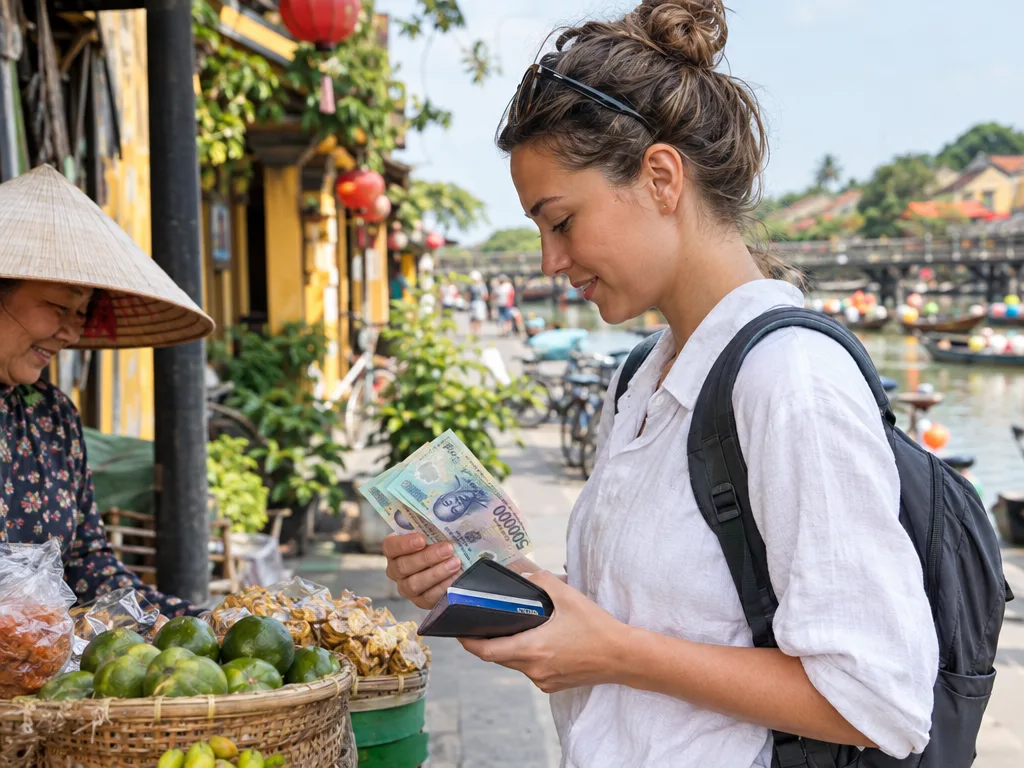
Knowing how to handle money is one of the simplest ways to make travel in Vietnam feel easier. You do not need a complicated financial system, but you do need a plan for the moments when a card works well, when cash is more practical, and when you should keep a backup. This guide explains how to prepare Vietnamese dong, use ATMs and cards, manage airport arrival costs, and protect your money without carrying everything in one place.
Start with a two-part payment plan
The most useful approach is not choosing between cash and cards. It is carrying both and giving each a clear job. Use a card for larger, planned expenses where the business has a reliable terminal, and keep Vietnamese dong for smaller purchases, street food, local markets, short rides, tips, and places outside major tourist areas. That combination gives you convenience without assuming every vendor accepts the same payment method.
Before departure, check that your main card is enabled for overseas use and confirm how your bank handles foreign transactions. Save your bank’s official contact method in your phone, but do not rely on the phone alone: keep one physical backup card separate from your wallet. A small reserve of another payment method can be more useful than a large amount of cash.
- Primary card for hotels, tours, and larger established businesses.
- Backup card stored separately from your everyday wallet.
- Local cash for small purchases and places where card payment is uncertain.
- A written or offline record of emergency bank contacts and card instructions.
Understand Vietnamese dong before you pay
Vietnam’s official currency is the Vietnamese dong, written as VND or ₫. Notes range from smaller paper bills to larger polymer notes, and there are no coins in everyday circulation. The number of zeros can look intimidating at first, so slow down when reading a bill rather than relying on colour alone.
The official Vietnam Tourism currency guide specifically warns travellers to double-check the 20,000 VND and 500,000 VND notes because they have similar blue shades. That is a useful habit whenever you are paying quickly, especially at a busy counter or after a long journey. Read the printed denomination, count the notes before handing them over, and check your change before walking away.
Make prices easier to read
When converting prices, use a live exchange-rate tool before your trip and remember that the rate you see is a guide, not necessarily the rate applied by your bank, card network, exchange counter, or ATM. It is safer to compare the total in VND than to make repeated mental conversions while standing at a checkout.
For your first day, save a simple note on your phone with the current approximate conversion and a few common denominations. Update it when rates move significantly. Do not treat an old screenshot or a remembered exchange rate as authoritative.
Using ATMs in Vietnam
ATMs are widely available in cities and at major airports, but availability and withdrawal limits can vary by bank and location. Vietnam Tourism says international-card ATMs can be found outside the arrival areas at major airports and that Visa cards are accepted across a large ATM network. The same guide notes that local-bank transaction limits can be lower than those at international-bank ATMs.
That does not mean you should wait until your balance is nearly empty. Withdraw enough for the next stretch of travel, then reassess. If you are heading to a rural area, an island, a mountain destination, or a smaller town, arrange your cash before leaving a place with dependable banking access. Keep the amount practical rather than carrying your entire trip budget.
ATM habits that reduce surprises
- Prefer ATMs attached to or located inside a bank branch when one is convenient.
- Inspect the machine for anything unusual around the card slot or keypad.
- Shield your PIN and take your card, cash, and receipt before leaving.
- Read every on-screen conversion or service-fee choice carefully.
- Keep your bank alert notifications enabled so you can spot an unfamiliar withdrawal.
If an ATM offers to convert the withdrawal into your home currency, compare the displayed terms with your bank’s normal process before accepting. You want to understand the rate and fees, not simply choose the option that looks fastest.
When cards are useful—and when cash is better
Major hotels, tour operators, boutiques, larger restaurants, supermarkets, and spas commonly accept international debit or credit cards, according to Vietnam Tourism’s practical payment guidance. Cards are especially convenient for bookings and planned expenses because they reduce the need to carry a large amount of cash.
Cash remains important for small purchases. Street vendors, casual food stalls, local markets, small family-run businesses, and some transport situations may be cash-first or may not have a dependable card terminal. Even where a card is technically accepted, a terminal may be offline, a minimum spend may apply, or the person serving you may prefer cash.
Use the payment method that matches the situation:
- Card: accommodation, advance bookings, larger established venues, and online reservations.
- Cash: street food, small cafés, markets, local services, tips, and backup transport.
- Either: restaurants, shops, and tours—ask before ordering if the payment method matters.
Never hand over a card casually or leave it out of sight. Check the amount on the terminal before approving a transaction, keep receipts for larger purchases, and review your account later when the transaction has posted.
Plan your airport arrival spending
Your first payment decisions happen before you reach your hotel. Vietnam Tourism’s airport guide says ATMs are available outside airport entrances and describes currency exchange facilities at international airports. That gives you options, but you still need a simple arrival plan because you may be tired, offline, or managing luggage.
Before landing, decide how you will pay for the first ride, a drink or meal, and any immediate arrival needs. If your transport is prepaid, you may only need a small amount of dong at the airport. If it is not, use the official taxi area, a clearly identified transport desk, or a reputable booking arranged in advance. Avoid exchanging or withdrawing more than you need simply because you are already at the airport.
Keep your phone charged and store your accommodation address in a form you can show without an internet connection. If you plan to use a ride-hailing app, confirm that your account, data connection, and payment method are ready before leaving the terminal. A small amount of cash remains useful even when your main airport transfer is booked online.
Exchange money without losing track
You can exchange foreign currency at airports, banks, hotels, and tourist areas, but the rate and convenience can differ. Compare the amount you will receive, ask whether a fee is included, and count the notes before leaving the counter. Keep the receipt when one is provided, especially for a larger exchange.
Do not feel pressured to exchange your entire budget at the first available counter. A staged approach is easier to monitor: obtain enough for the first part of the trip, then use a reputable bank, exchange counter, or ATM when you know what you need. Avoid informal offers from strangers or anyone who rushes you through the calculation.
If you return home with leftover dong, remember that smaller notes may be harder to exchange outside Vietnam. Spend or exchange sensibly near the end of your trip, while keeping enough for your final transfer and airport needs.
Tipping, bargaining, and everyday price conversations
Tipping is not governed by one universal rule in Vietnam. Vietnam Tourism notes that it is not traditionally expected in restaurants and cafés, although it may be increasingly appreciated in some settings such as private guiding or beauty services. If a service charge is already listed, read it before adding anything extra.
At markets and tourist shopping areas, gentle bargaining can be common. Ask the price clearly, compare a few options, and decide whether the final amount feels fair before agreeing. Keep small notes available for ordinary purchases so you do not need to produce a large bill for a modest total.
When a price is unclear, confirm the total before the service begins. This is useful for transport, tours, tailoring, and any activity where the final amount could depend on duration or extras. A calm question at the start prevents an awkward discussion later.
Protect your money throughout the trip
Separate your payment methods. Carry one card and a modest amount of cash for the day, store the backup card elsewhere, and keep the rest of your funds in a secure place. Use a hotel safe when appropriate, but do not assume that a safe replaces normal awareness. In crowded areas, keep your wallet, phone, and bag close to you.
- Do not display a thick roll of notes in public.
- Keep emergency contacts and card instructions offline.
- Freeze a lost card promptly through your bank’s official app or contact channel.
- Review transactions during the trip rather than waiting until you return home.
- Carry a little backup cash separately from your main wallet.
Digital payment habits help too. Use device locking, avoid entering banking details on unfamiliar networks or links, and decline any transaction you cannot understand. Contactless payment can be convenient where available, but it is still worth checking the amount before tapping.
A practical money checklist for Vietnam
Use this checklist a few days before departure:
- Check overseas activation, withdrawal limits, and notification settings for your cards.
- Save your bank’s official emergency contact details offline.
- Prepare a separate backup card and decide where it will stay.
- Download an exchange-rate tool and note that rates change.
- Plan how you will pay for your first airport transfer and first meal.
- Withdraw or exchange a manageable amount of dong before remote travel.
- Learn to distinguish common note denominations by reading the printed value.
- Keep receipts for significant purchases and monitor account alerts.
Final takeaway
The best Vietnam travel money strategy is flexible: use cards when they add convenience, cash when it is the normal local option, and a backup plan whenever you move away from major cities. Prepare a small arrival reserve, check every denomination carefully, and protect your payment methods as deliberately as you protect your passport. With those habits in place, everyday spending becomes one less thing to think about while you explore.
JOIN THE CONVERSATION
Comments (0)
No comments yet. Be the first to share a thought.